Biblical sources
the verses themselves.



Preserved in Pashtun homes, as lived practice — Pashtun oral traditions:
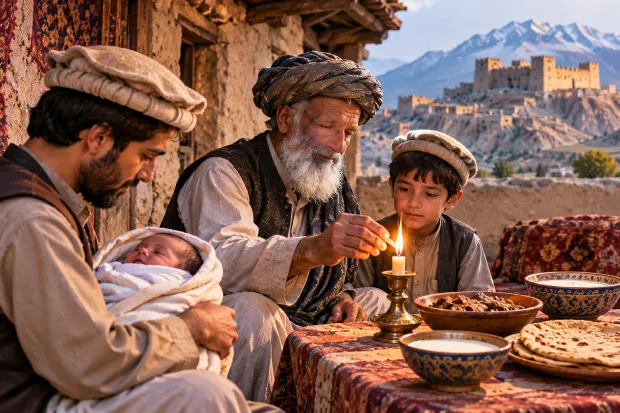
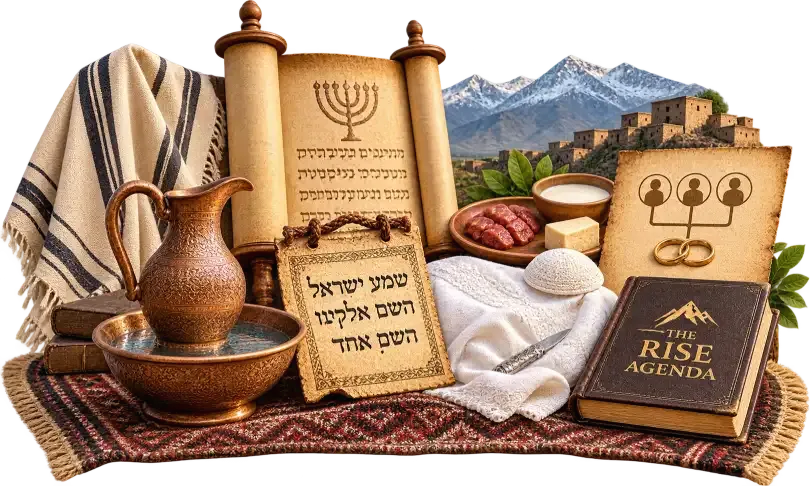
Circumcision on the eighth day after birth, with a sandaq holding the infant, as the Torah commands. The prohibition against mixing meat and dairy, kept in homes where no one has heard of kashrut. Separate dishes for meat and milk. The avoidance of camel meat and milk, shellfish, and crustaceans, all forbidden by the Torah and permitted by Islam, yet refused by Afghans for centuries. Lighting candles on Friday night, the eve of Shabbat, in villages where the word Shabbat has been forgotten but the flame has not.
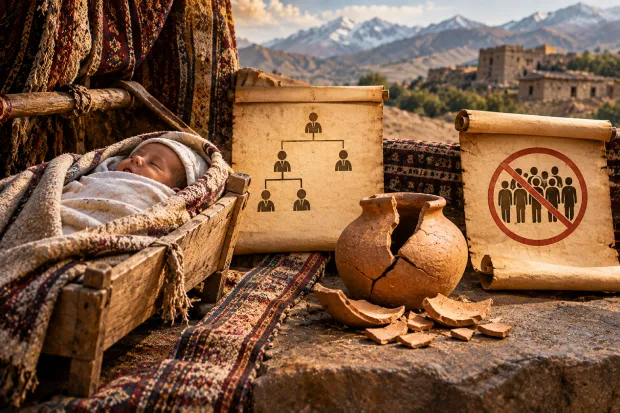
The prohibition against counting people, for fear that counting brings harm, as King David learned. Levirate marriage, when a brother marries his deceased brother\'s widow, as the Torah commands in Deuteronomy — yibum, kept without halitza, the release ceremony that ends the duty — because the Afghans never lost the practice. Marriage under a canopy, a chuppah, held above the bride and groom. Breaking glass or clay at weddings.
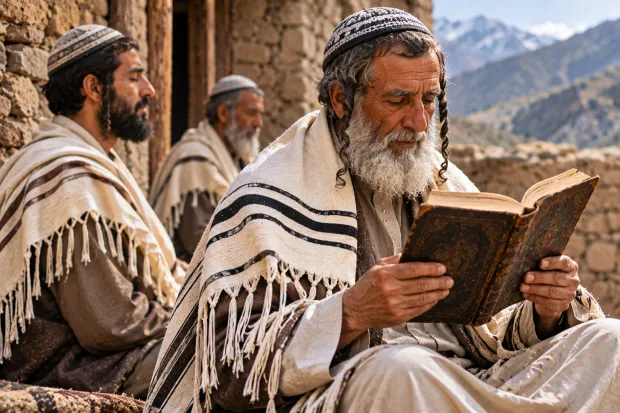
Sidelocks grown above the cheekbone, peot, worn by elders who have never seen a Jew. A four-cornered garment with fringes, a tallit, called saadar in Pashto. A skullcap, a kippah, identical to the Jewish one, worn in old Afghan photographs. Rocking the body while reading sacred texts, as Jews have done for millennia.
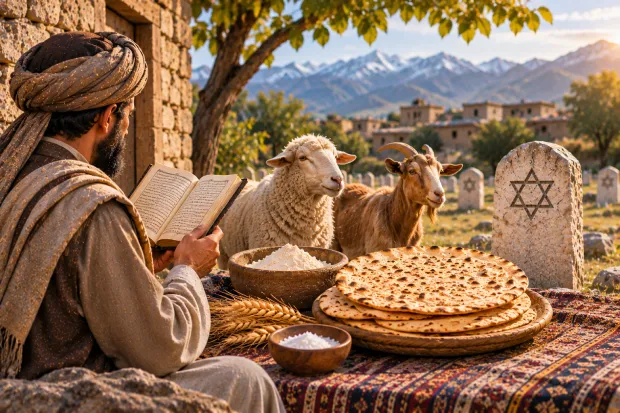
Cemeteries reserved only for Bnei Yisrael, even in places where the meaning of the word has faded. The blood of a slaughtered animal rubbed on doorposts, as the Israelites did in Egypt. Sheep called pesah in Pashto, goats called oza, words that carry the memory of the Passover sacrifice. A flatbread of flour, water, and salt made in spring, as matzah is made at Pesach. Weekdays named by number, starting from Sunday, as in Hebrew, with Saturday called khaali, the day of rest.
Spanning the life cycle and annual events of the Pashtuns.
Dr. Eyal Beeri of Ariel University, working under the late Rabbi Eliyahu Avichail of Amishav, documented over 200 customs spanning the life cycle and annual events of the Pashtuns. His research found a strong correlation between customs practiced inside the home and Jewish customs, distinct from both Islamic and Hindu practice. Amishav, the Israeli organization dedicated to reconnecting with the lost tribes of Israel, has compiled and published this evidence at . amishav.org
Yitzchak Ben-Zvi, the second president of Israel, studied the tribes of Afghanistan and wrote that Afghan tribes coexisted with Jews for centuries and \'to this day retain the tradition of their descent from the ten lost Israelite tribes.\'
Its principles map onto the Torah commandment by commandment.
 01
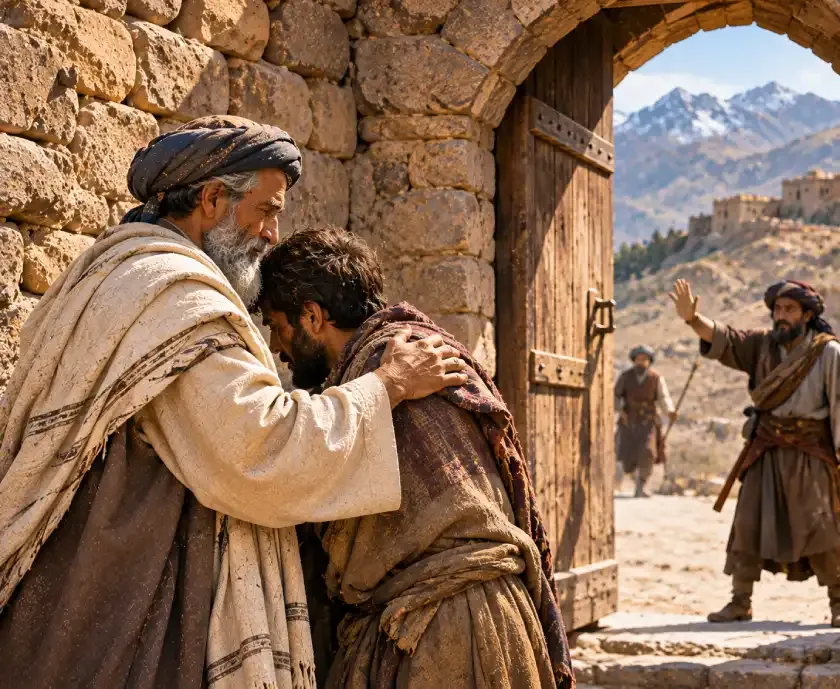
Nanawatai — asylum given to anyone who asks, even an enemy — is the city of refuge of Numbers 35 and Deuteronomy 19: the pursuer may not touch the one who has reached the gate.
 02
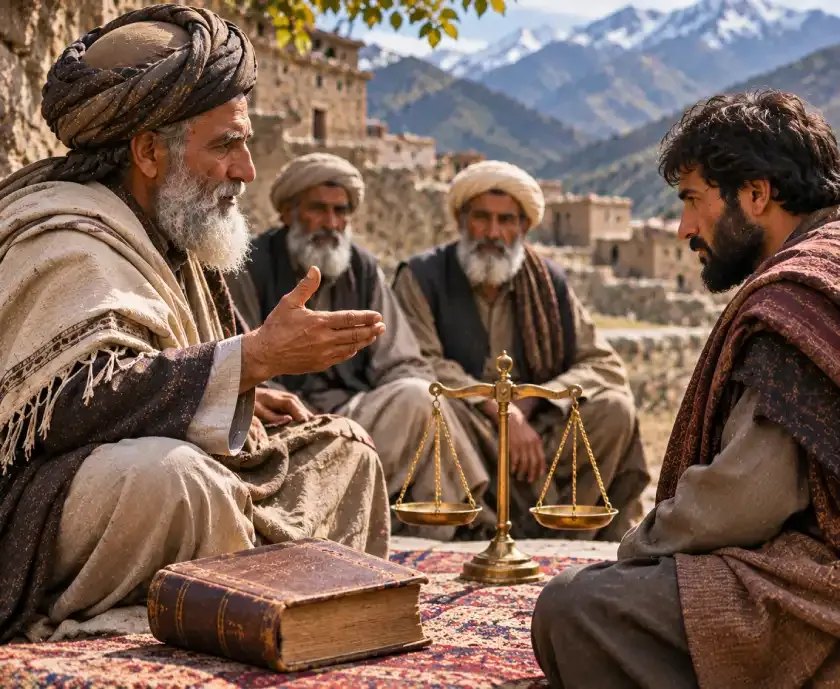
Badal — Retaliation and the Blood Avenger. The Pashtunwali principle of badal is the obligation of retaliation, including blood vengeance for a wrong committed against one\'s family or tribe. This corresponds to the Torah institution of the go\'el hadam, the blood avenger, found in Numbers 35:19 and Deuteronomy 19:21. In the Torah, retaliation is not lawless vendetta but a structured legal mechanism bounded by intent, proportionality, and due process through the cities of refuge system. The correspondence between badal and the Torah\'s blood avenger principle is noted in some communities as a shared cultural framework of regulated retribution rather than unbounded revenge.
 03
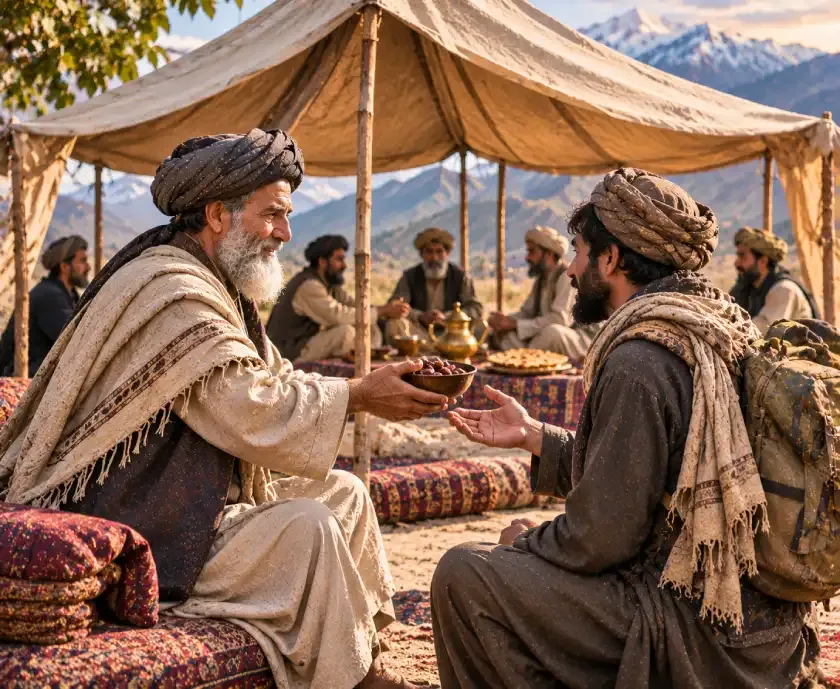
Melmastia — hospitality without question — is Abraham\'s tent, open on all four sides so no traveller would ever be turned away.
Pashtunwali is the older code, and it carries Torah inside its bones without ever naming the source. A Muslim scholar can see it. A rabbi can see it.
The full catalog of documented Israelite customs preserved by Pashtuns is maintained by Amishav at . amishav.org
The covenant was given through the Torah at Sinai, and the Torah is the original covenant document — the one that binds the tribes to each other and to Hashem.
Deuteronomy says it plainly: the covenant was made (Deuteronomy 29:14–15) — with the generations not yet born, including the ones scattered into exile.not with you alone, but with those who are not here today
A later text cannot replace the original document of a covenant it did not make.
The Quran itself does not claim to replace it — it commands the People of the Book to stand on the Torah: (Surah Al-Baqarah 2:40).O Children of Israel! Remember My favor which I bestowed upon you, and fulfill your covenant with Me that I may fulfill My covenant with you, and fear none but Me
The book the Afghan people read every day points back to the Torah — it does not point away from it.
Every later tradition, on its own terms, points back to the root. So the reunion of the lost tribes with Yehudah cannot be built on a later revelation. It requires returning to the original root document — the Torah — because that is where the covenant lives, and the covenant is the mission.
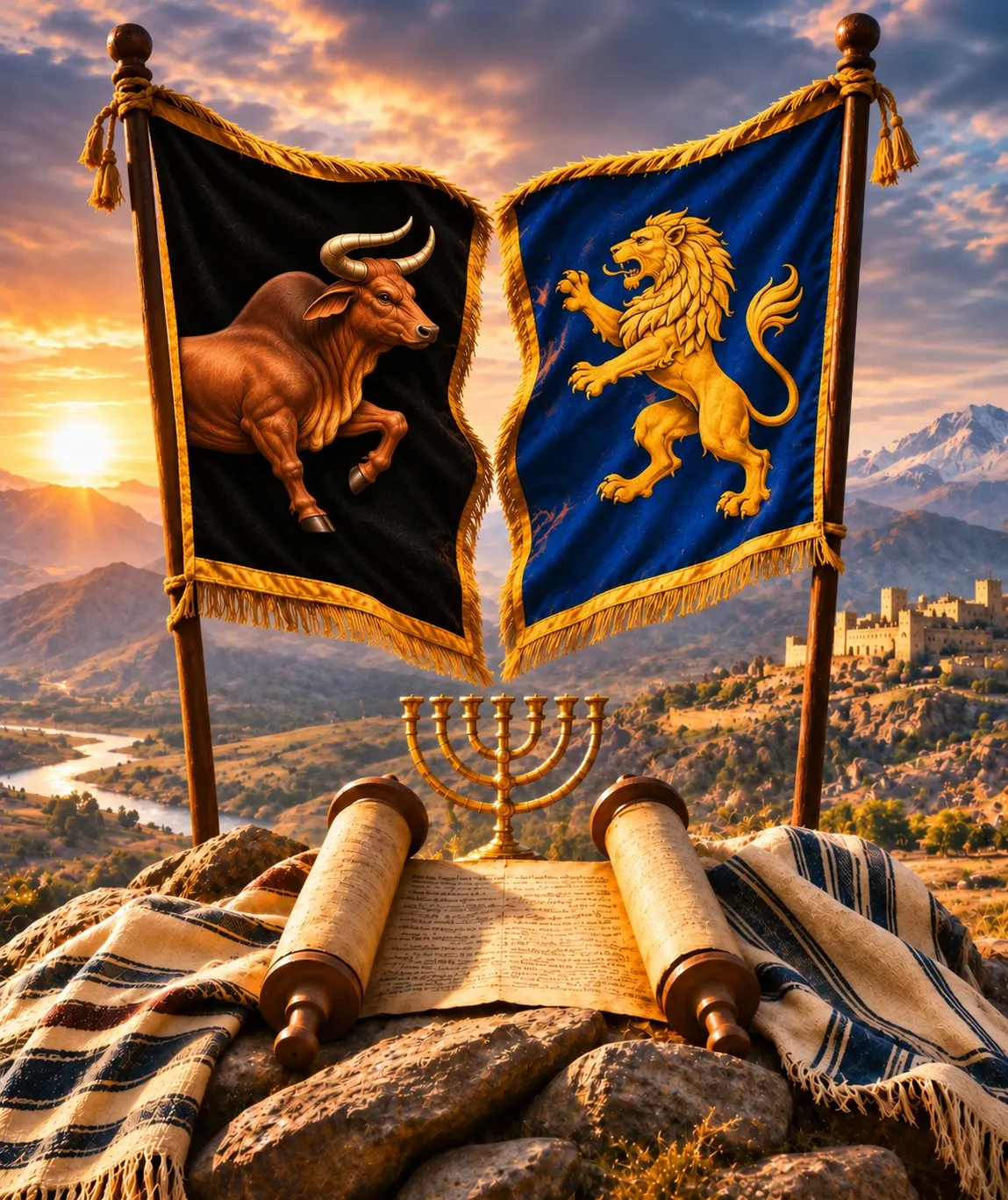
No other book in the world has a chapter like Deuteronomy 28. It was written before the events, and it names both halves of the story: the blessings for keeping the covenant, and the curses for abandoning it — and the curses are not vague.
And the Lord will scatter you among all peoples, from one end of the earth to the other.
Deuteronomy 28:64
Scattering among all the nations, losing the land, living among peoples who do not know you — written as the terms of the covenant, addressed to Bnei Yisrael by name. Read that chapter against the last 2,700 years of the children of Israel in exile, and it does not read as prophecy.
It reads as a record.

And Deuteronomy 30 is the only document that contains the exit.
When all these things come upon you, the blessing and the curse... and you return to the Lord your God and obey His voice... then the Lord your God will restore your fortunes and have compassion on you, and He will gather you again from all the peoples where the Lord your God has scattered you. If your outcasts are at the end of the heavens, from there the Lord your God will gather you.
Deuteronomy 30:1–4
The exile was written into the covenant, and the return was written into the covenant, in the same document, before either happened.
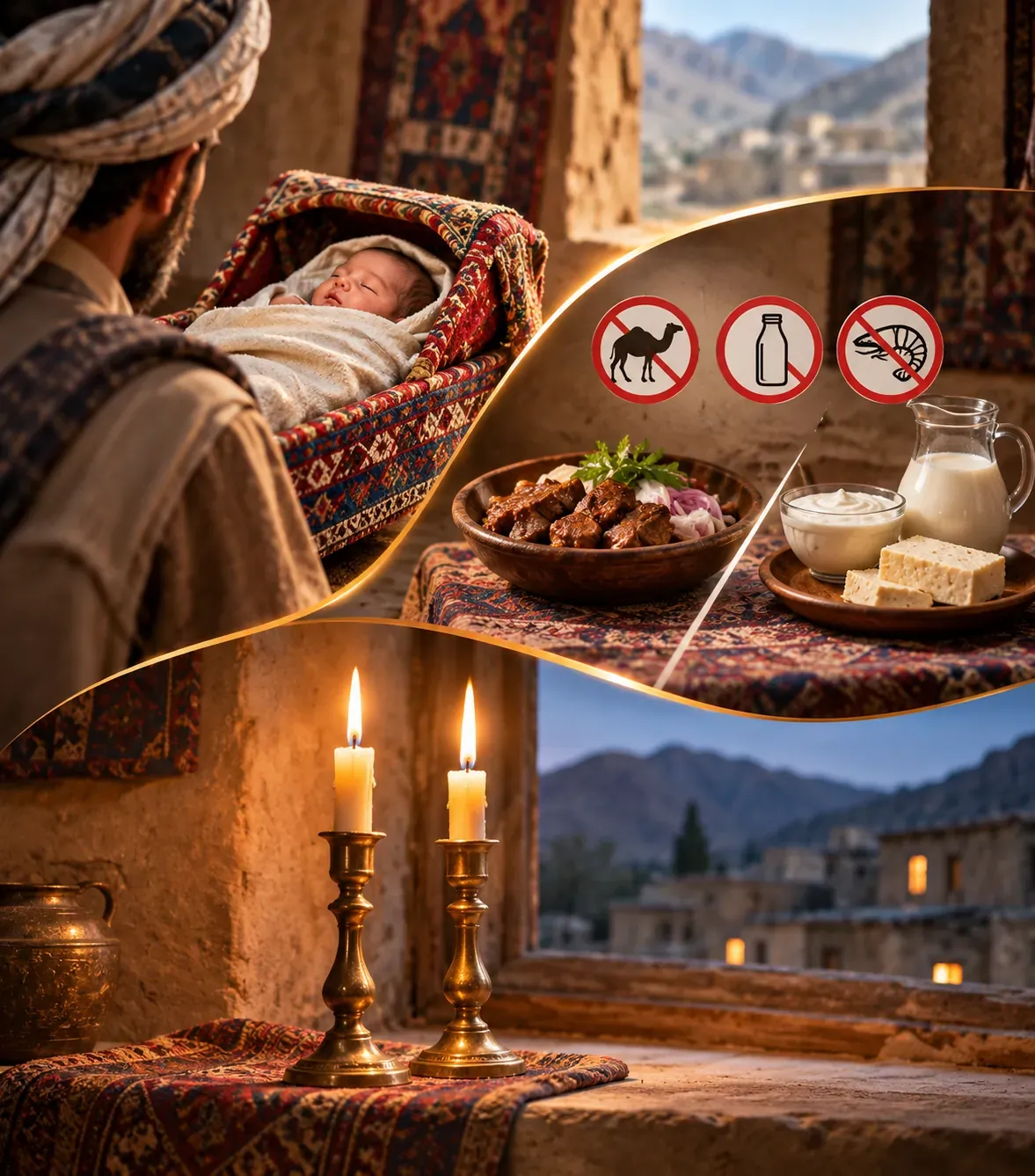
And the sign of that return is the sign the Afghan people never stopped carrying:
And the Lord your God will circumcise your heart, and the heart of your descendants, to love the Lord your God with all your heart and all your soul.
Deuteronomy 30:6
The same covenant that promised the regathering sealed itself with circumcision — the first custom the children of Yosef kept without knowing why.
The chapter closes with the choice put to the people directly:
I have set before you life and death, the blessing and the curse. Therefore choose life.
Deuteronomy 30:19
Choose life — that is the whole mission in three words.
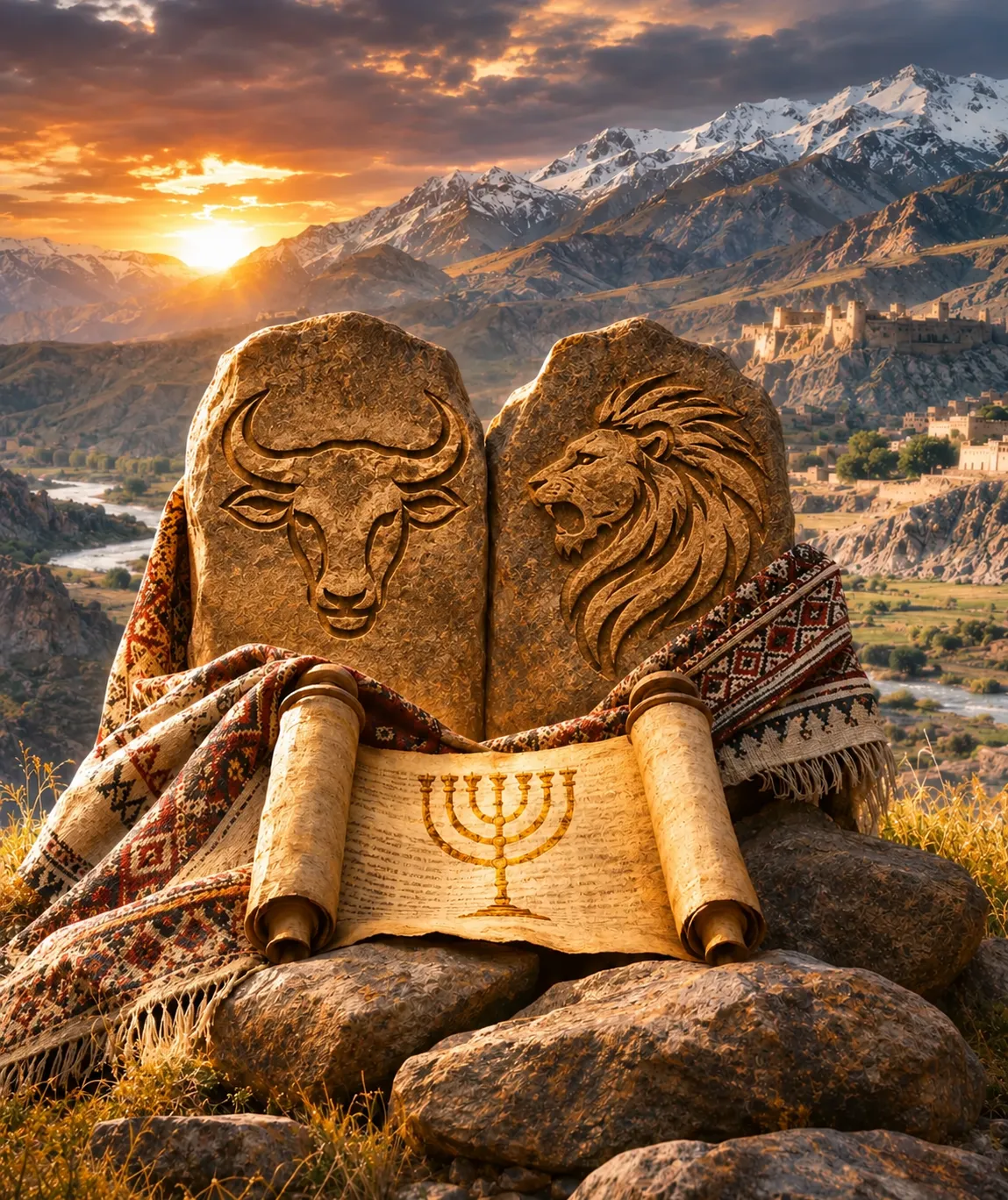
The Quran has covenant language, but no chapter like Deuteronomy 28 — no blessings-and-curses architecture, no exile-and-regathering roadmap written before the fact. The New Testament has no roadmap for the tribes at all. Only the Torah contains the full structure: the covenant, the exile, the return, and the choice — addressed to Bnei Yisrael by name.
And that is the final point. The Torah is for Bnei Yisrael only. It is not a general book of wisdom offered to everyone; it is the covenant document of one family, the children of Israel. That is exactly why the Pashtuns who know they are Bnei Yisrael must come back to it: the roadmap in Deuteronomy is addressed to them.
Classical sources are separated from interpretation, and labelled as such.
More than 15 references will be uploaded to this page, including:
Their scattering is in it. Their return is in it.
No other book on earth is holding their mail.
Explore the JourneyAmong the key contributors: Dr. Eyal Beeri of Ariel University, whose documentation of over 200 Pashtun customs anchors the customs evidence on this site.
Amishav (amishav.org), the Israeli organization dedicated to reconnecting with the lost tribes, whose compiled documentation is maintained at amishav.org.
Amishav — the Israeli organization for the lost tribes: — lists Mr Hewad Nabi as a partner on its homepage and offers Torah courses in Pashto. https://amishav.org
Visit amishav.org